alma goes live
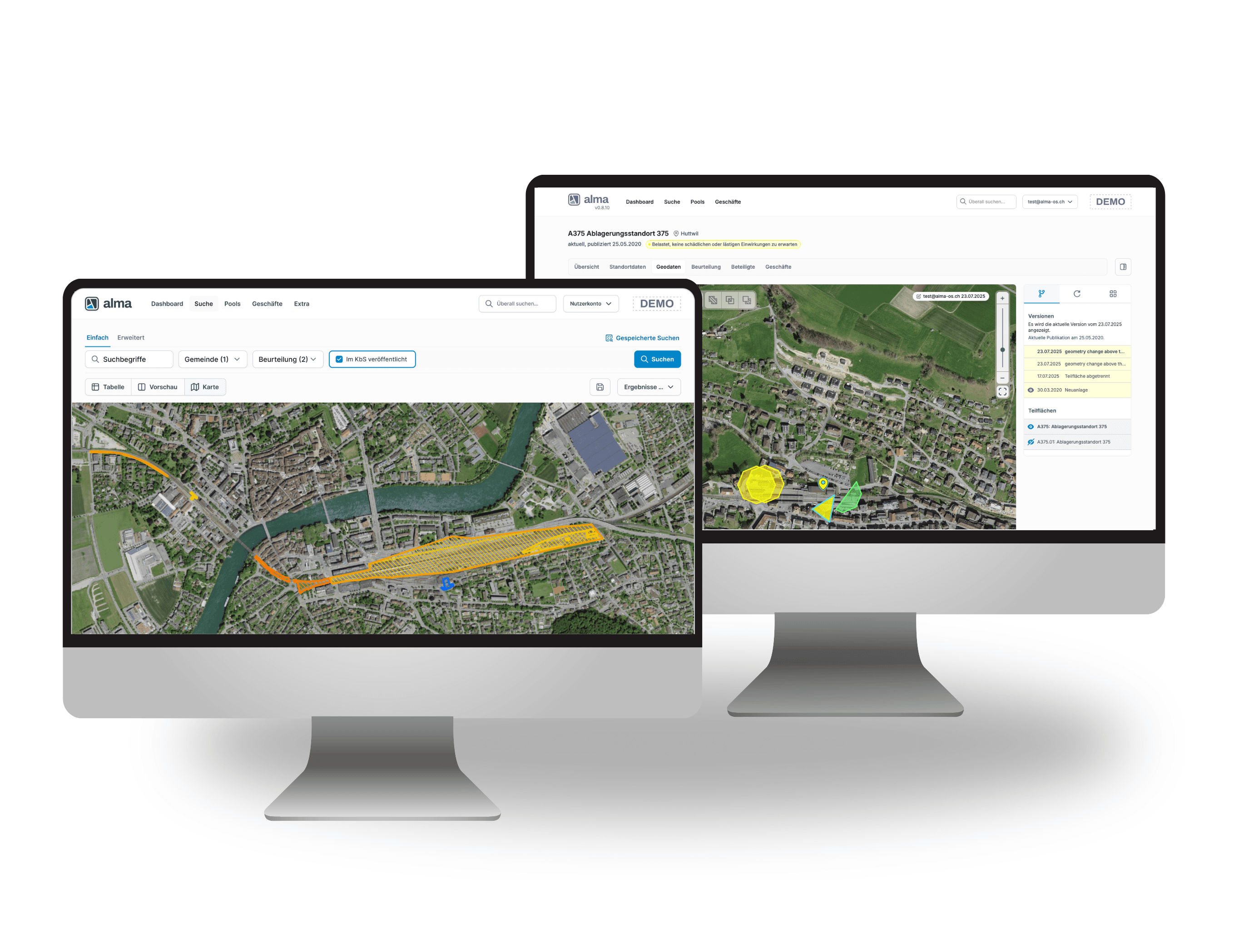
After a long period of preparation and more than a year of programming, we finally succeeded in September 2025. Together with the canton of Schwyz, we were able to migrate the first office to the new alma software as the successor to Altlast4Web.
Proven technology reimagined
For more than 15 years, Altlast4Web had been used by numerous cantonal offices, federal authorities and the Principality of Liechtenstein as the central software solution for managing the cadastre of contaminated sites. Although we had carried out constant updates, extensive refactoring had never taken place. The fact that 15-year-old front-end technologies were still working at all was therefore something of a minor miracle. However, maintenance of the software was becoming increasingly complex, so that at some point we reached a stage where we could no longer promise regular security-related updates with a clear conscience.
Designed together
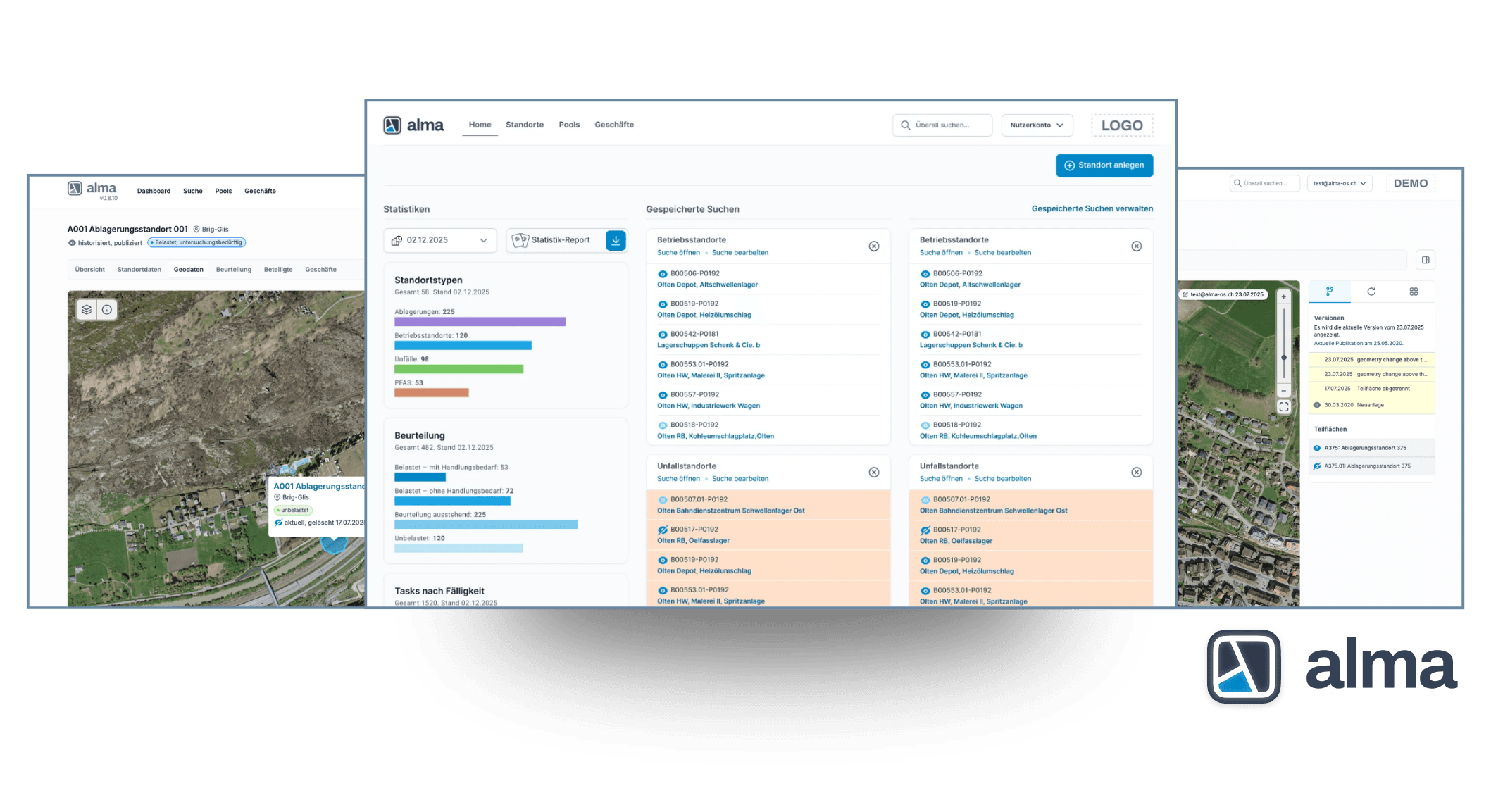
So, at the beginning of 2023, the design process for a completely new application began. The focus was on new technologies, a more modern UX and taking current security requirements into account. The core functions of Altlast4Web, on the other hand, had proven themselves so well that they were to be adopted in a modernised form, but essentially unchanged. During the design phase and subsequent development, we always placed great importance on close cooperation with all the authorities involved. The entire requirements specification was collaboratively developed in a wiki that was accessible to all participants. Through regular meetings of a core group and occasional meetings of all participants, we were able to ensure that most expectations for the software were taken into account. Within the same framework, we were also able to quickly and efficiently develop the financing for the entire project.
Steady rollout
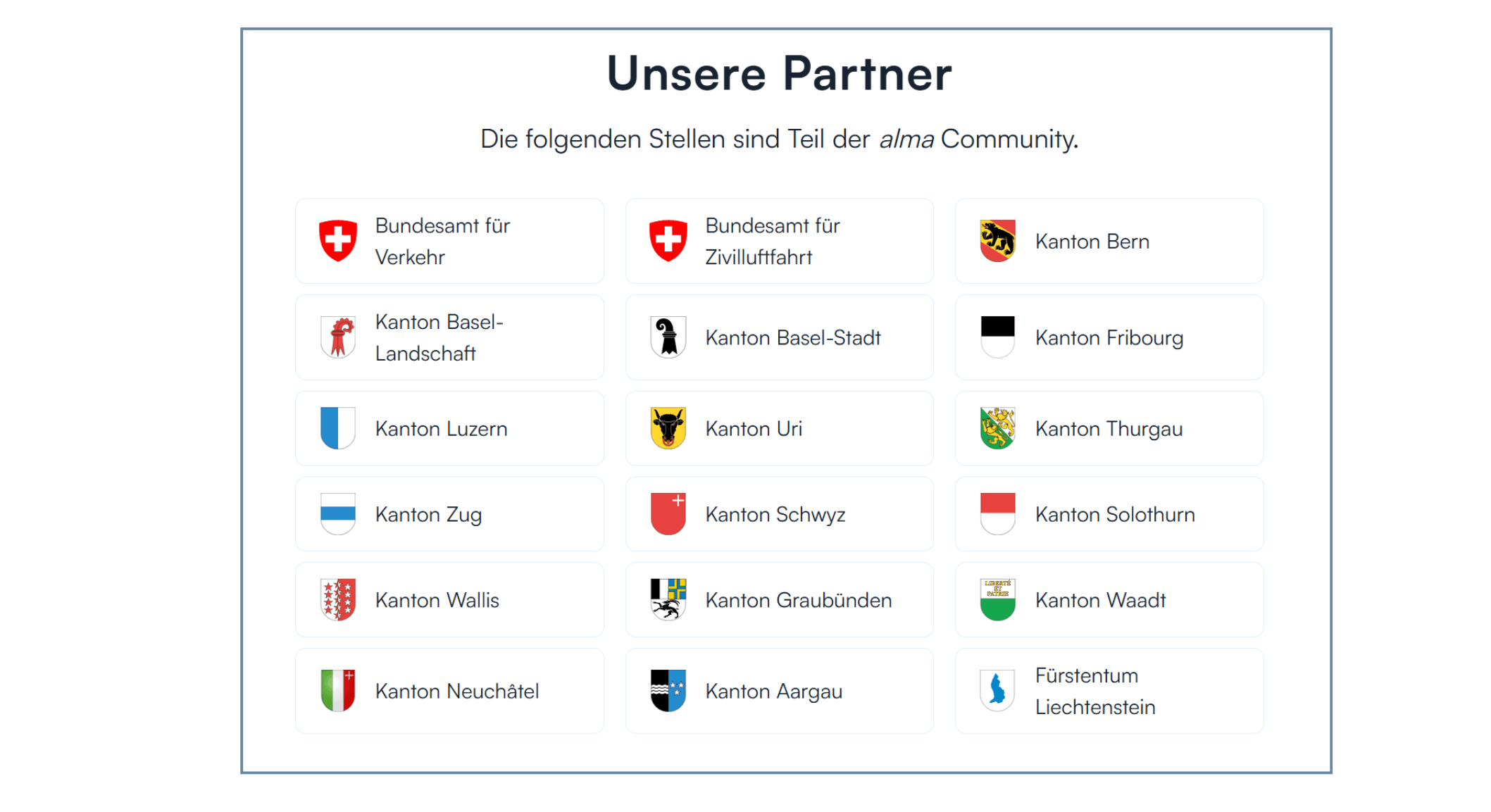
Following its go-live at the Office for the Environment of the Canton of Schwyz in September 2025, alma is currently being rolled out at other offices. The switch from Altlast4Web to alma is relatively easy to implement and requires little effort on the part of either geOps or the specialists at the office. Fortunately, the development of alma has attracted other cantons to join the community. Migrating these from a wide variety of existing solutions to alma may be considerably more complex. According to current plans, all 18 offices should have migrated to the new solution by the end of 2026.
Satisfaction all round
The implementation of alma represents a win-win situation for everyone involved. The shared experience with the previous solution, Altlast4Web, combined with the collaborative approach to specifying the new solution, resulted in a coordinated list of features that were necessary and useful for everyone. The total investment in the project could thus be optimally distributed, and all parties involved could expect an optimised solution at a fraction of the cost of individual development. Synergies could also be exploited in the administrative tasks that arise in every office when procuring a software solution. This unusual approach was possible on the one hand because alma was designed from the outset as an open-source solution with the promise that all developments would be made available to all parties involved. On the other hand, the project would hardly have been possible if we at geOps had not laid the foundation for mutual trust over many years through our committed, efficient and transparent cooperation. We would therefore like to conclude this article by thanking everyone involved in alma. Only by working together was it possible to realise this flagship project for digital sovereignty and sustainability in public administration.
We greatly appreciate our collaboration with geOps in implementing the application for managing contaminated sites in the canton. Thanks to constructive and straightforward communication, our concerns and requirements were always addressed quickly.
– Eva Braxmaier, Canton of Fribourg
Further information about alma can be found on its dedicated website.